Client Onboarding Service Design
A B2B company that offers white-labeled software had a dysfunctional process for onboarding new clients. The goal of this project was to identify internal and external pain points, envision an ideal client journey, and create a plan for implementation.
We need to evaluate the systemic issues facing our company. How might we design our internal processes to facilitate a seamless experience for client companies?
Initial Inquiry
I ran working sessions across each department to identify pain points and map their interdependencies out visually.
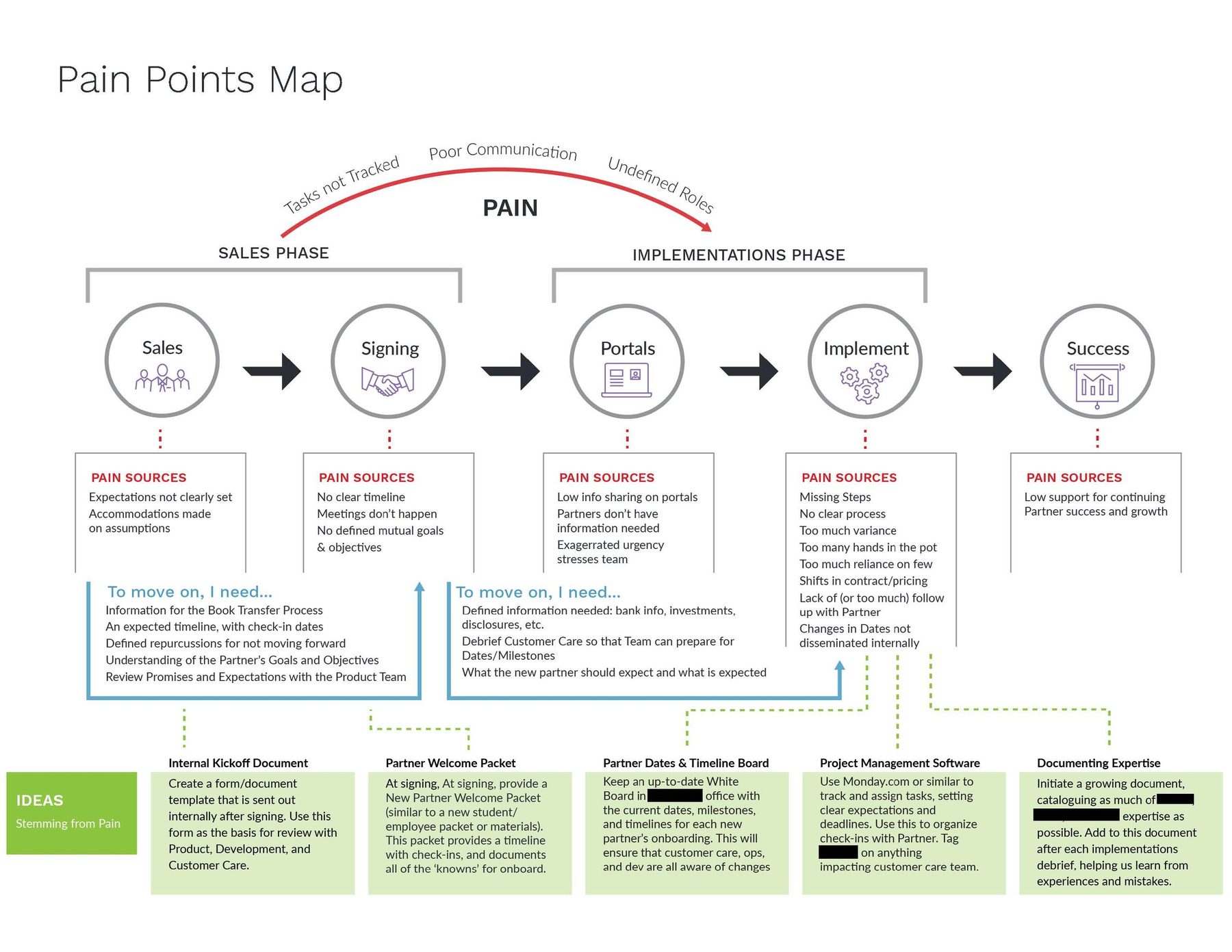
Pain Points Mapping
Through collaborative workshops, we created a comprehensive map of pain points across the organization, revealing systemic issues and opportunities for improvement.
Envisioning
Regrouped with each department to present the pain points map. Ran working sessions to envision an ideal customer journey based on insights from pain points exercises.
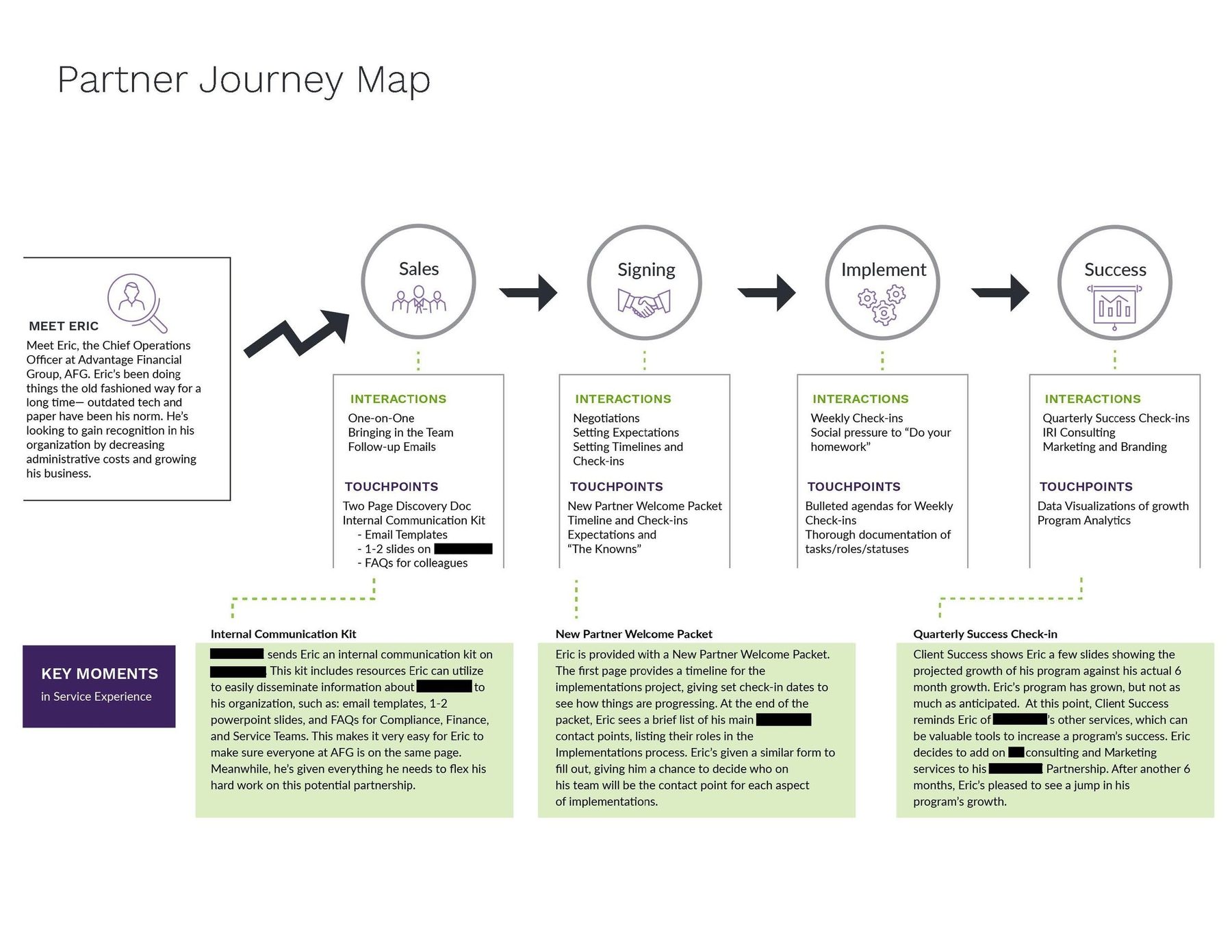
Client Journey Map
A comprehensive journey map that visualizes the ideal client experience from initial contact through successful onboarding and beyond.
Storyboarding
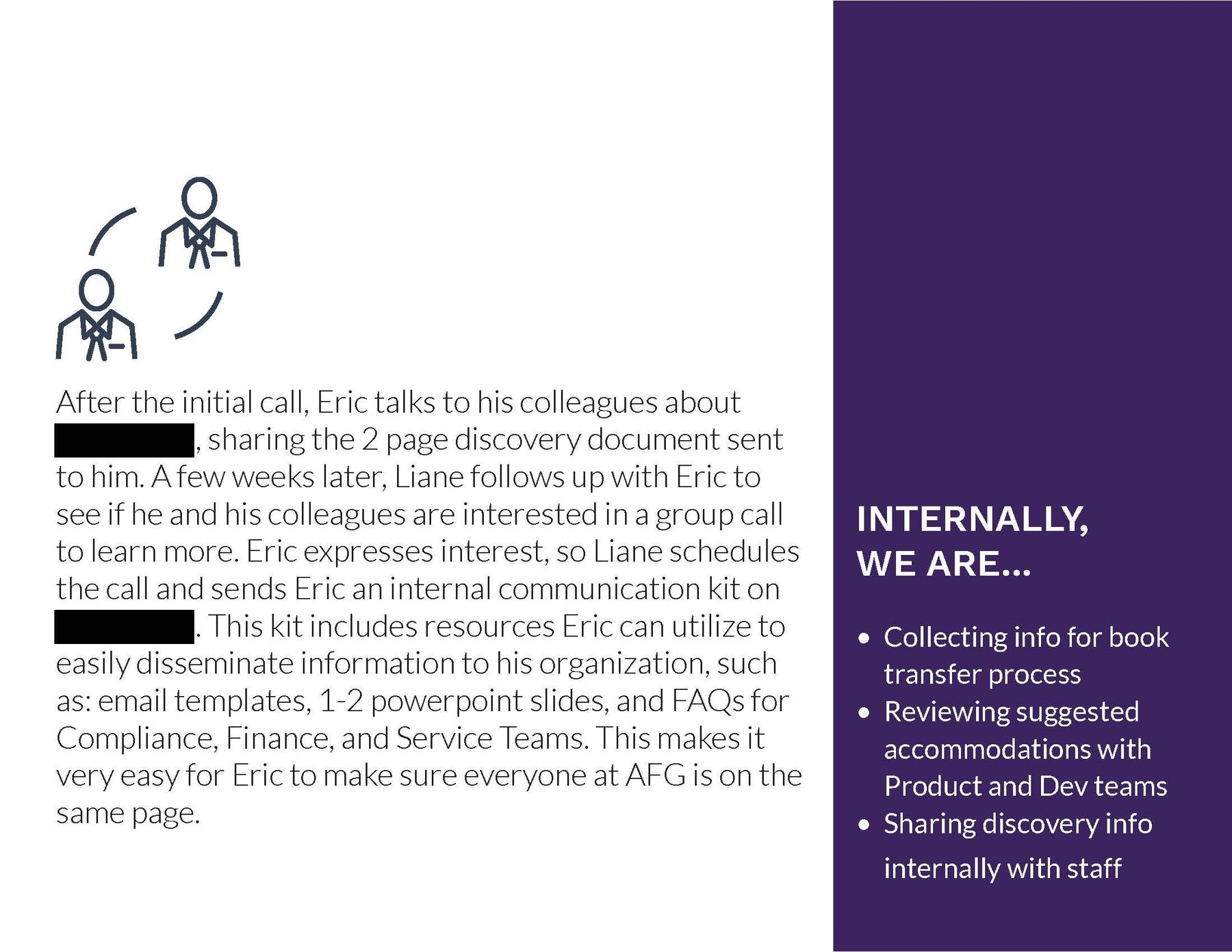
Expanding on the journey map, I wrote out a narrative based loosely on a fictional rewriting of a past client's experience. In our meeting, I said "Let's do some happy client fanfiction" as a jumping off point for the narrative.
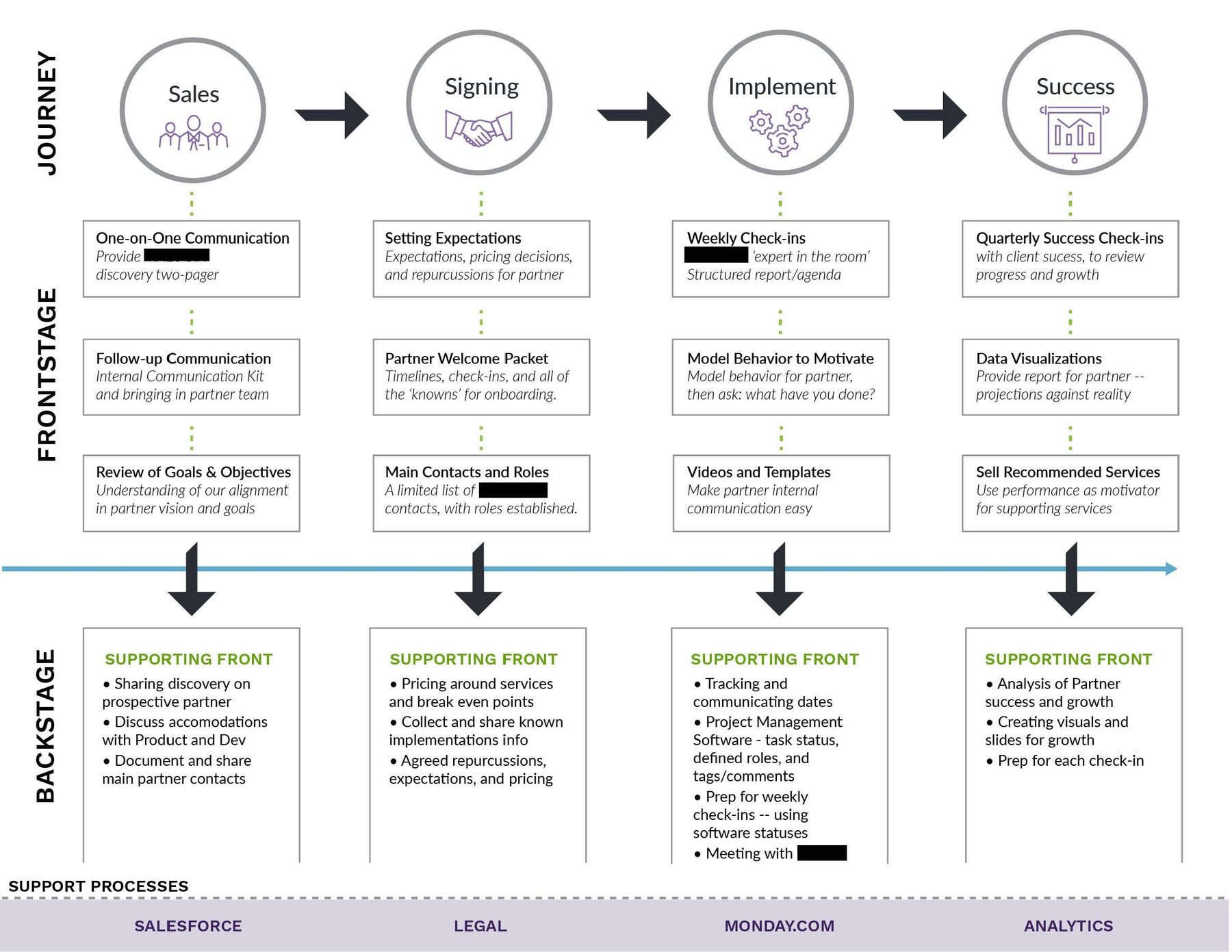
Service Blueprint
Summarizing working sessions across the company, the service blueprint provided C-suite with recommendations for backstage processes, frontstage interactions, and the supporting systems needed to deliver an exceptional client onboarding experience.
Impact
A ~65% reduction in time from signed contract to a client going live, following adoption of the blueprint's recommendations.
Leadership adopted a structured onboarding packet and moved workload management from ad hoc tracking to Monday.com — concrete process changes traceable directly to the blueprint.
The process brought together teams that rarely collaborated, creating shared understanding and breaking down silos around onboarding.
The journey map helped the organization adopt a more client-centric perspective in onboarding decisions.
Reflection
This project reinforced that service design work only matters if it survives contact with implementation. The blueprint itself was well-received, but the real signal was that leadership acted on it — adopting a new onboarding packet and a dedicated workload-management tool, and cutting client time-to-launch by more than two-thirds. Turning abstract pain points into artifacts that are concrete enough to actually get implemented is the harder, more valuable half of service design work.
The facilitation approach mattered as much as the artifacts. Getting cross-functional buy-in started with building a genuine, detailed understanding of the pain points and how they connected to each other — then reframing every one of them into its corresponding positive, which is what "let's do some happy client fanfiction" was really doing. Staying bogged down in problems can blind a room to what's possible; giving people space to name the negative and then ground it in a concrete positive is what got colleagues engaged in designing an ideal experience instead of just relitigating what was broken.